












- Bonus Games Slots
- Free Games Slots
- Progressive Jackpots Slots
- Top NuWorks Casino
Card counting myths and realities
Successful tracking of cards relies on precise observation and disciplined execution rather than luck or intuition. Studies reveal that skilled practitioners can achieve a statistical edge of up to 1-2% against the house by monitoring card distributions meticulously. This advantage, while modest, can translate into thousands of dollars over extended sessions.
Card counting is a technique that rewards diligent players with a statistical edge in games like blackjack. By meticulously tracking the ratio of high to low cards in the deck, players can adjust their betting strategy accordingly. This methodic approach, emphasizing keen observation and disciplined practice, can turn the odds in the player’s favor. Although casinos implement various countermeasures to inhibit this tactic, savvy players can still find a way to gain an advantage. To delve deeper into mastering the intricacies of this skill and refine your approach, consider exploring additional resources at jet4bet-online-casino.com for further insights and strategies.
Contrary to popular belief, mastery over this technique demands consistent practice and mental agility rather than complex mathematics. The most effective systems assign simple values to cards, allowing players to maintain running counts without interrupting gameplay. Casinos, aware of these tactics, employ multiple decks and frequent shuffling to dilute potential gains.
It is critical to understand that detection risk and casino countermeasures often outweigh theoretical profit margins. Professional operators mitigate identification by varying bet sizes subtly and avoiding suspicious behaviors. Ultimately, long-term success hinges on blending strategy with discretion, recognizing that this approach does not guarantee instant riches but offers a calculated approach to exceeding basic odds.
How Card Counting Actually Works in Blackjack
Tracking the ratio of high to low cards remaining in the deck shifts the player’s advantage. When decks are rich in tens and aces, the likelihood of hitting a blackjack, which pays 3:2, increases. This favors the bettor, enabling larger wagers with reduced risk.
The most common approach assigns point values to cards: low cards (2 through 6) carry +1, middle cards (7 through 9) count as 0, and high cards (10, face cards, ace) are −1. Maintaining a running total as cards are revealed enables estimation of the deck’s composition.
Adjusting bet size and playing strategy aligns with the running count normalized by decks remaining, known as the true count. A positive true count signals an abundance of favorable cards, prompting increased betting and conservative play, such as standing on 16 against a dealer’s 10.
Unlike misconceptions that imply complex memorization or prediction, this system relies on simple arithmetic and pattern recognition. It does not guarantee victory but shifts the statistical edge slightly over the house, often by 0.5% to 1.5%, sufficient for profit over time.
Casinos counter this methodology with multiple decks, frequent shuffling, and betting limits, which reduce the practical utility of tracking. Still, disciplined execution and understanding when to deviate from basic strategy mark effective exploitation of this advantage play technique.
Why Casinos Do Not Always Ban Card Counters Immediately
Casinos prioritize long-term profit over immediate expulsions. Removing a skilled strategist outright risks alerting others and reduces data on their methods, which could improve detection. Instead, establishments use subtle counters such as altering table rules, shuffling more frequently, or restricting bet sizes to erode advantage without direct confrontation.
Employees trained in behavioral analysis monitor flagged players discreetly, compiling patterns before acting. Immediate bans can provoke legal challenges or negative publicity, particularly when advantage is gained through allowed techniques rather than cheating devices. Hence, patience enables casinos to limit losses methodically.
Additionally, maintaining an atmosphere with high-stakes players attracts more revenue, so banning sophisticated players might deter wealthier patrons. By managing suspected advantage gamblers with caution, casinos balance risk management and customer retention strategically.
Understanding the Skill and Practice Needed for Card Counting
Mastering this technique demands rigorous training and unwavering focus. Successful practitioners typically commit 100 to 200 hours refining their ability to track values accurately while maintaining normal behavior. Regular drills to enhance mental arithmetic speed and memory retention are indispensable.
Training tools such as flashcards, apps, or custom exercises help improve rapid recognition of running counts and true counts under distractions. Controlled practice sessions must simulate casino environments, incorporating noise and multiple decks for realism.
The ability to maintain composure and avoid detection requires not only numerical proficiency but also behavioral discipline. Continuous practice in multitasking–managing bets, observing dealer actions, and calculating odds simultaneously–is a cornerstone of skill development.
Consistent results rely on incremental improvement through feedback loops. Tracking errors and adjusting strategies after sessions can reduce miscalculations by up to 30%. Without systematic evaluation, even seasoned players face diminishing returns.
While innate aptitude for numbers can accelerate learning, anyone engaging seriously will need persistent commitment and methodical practice schedules spanning weeks or months before reaching competence in live environments.
Legal Considerations: Is Card Counting Against the Law?
Using techniques to track card sequences is not illegal under federal or state laws in the United States. Casinos operate on private property and can enforce house rules, including barring players suspected of employing these tactics. While the act of mentally monitoring cards is lawful, attempts to use external devices to assist in tracking are prohibited and may result in criminal charges.
Casinos reserve the right to refuse service or eject individuals engaging in strategic tracking, as it affects their profit margins. Surveillance teams are trained to identify subtle behavioral patterns linked with such strategies. Legal recourse against casinos for banning players is limited, given their status as private enterprises.
Outside the U.S., regulations vary widely. Some jurisdictions impose explicit bans on systematic card sequence tracking, with penalties that include fines or imprisonment. Players should consult local gaming laws before attempting these approaches abroad.
Consulting a gaming attorney provides clarity on rights and liabilities in specific legal environments. Maintaining discretion and adhering to venue policies minimizes conflict. Relying solely on mental acuity for advantage play keeps practices within lawful boundaries, whereas mechanical or electronic assistance crosses legal lines.
How Casino Surveillance Detects and Responds to Card Counting
Casinos rely on a combination of behavioral analysis and advanced technology to pinpoint players utilizing mental advantage techniques. Surveillance teams monitor betting patterns for sudden increases aligned with favorable shoe compositions, often flagged through real-time tracking software that correlates bet size shifts with deck penetration data.
Visual observation focuses on nonverbal cues such as intense focus shifts, repetitive signaling to accomplices, or altered betting rhythms inconsistent with normal play. Surveillance operators receive specific training to detect these subtle patterns, frequently cross-referencing with dealer feedback and pit boss reports.
When suspicion arises, the response protocol involves discreet intervention: players may be asked to modify their betting habits, moved to different tables, or in some cases, escorted off the floor. Some establishments deploy flat betting as a test–if bet size fails to fluctuate with expected odds, scrutiny diminishes; if it continues, identification solidifies.
Casinos also use statistical software that compares individual player results against expected house edges, highlighting outlier performances that merit further examination. This multi-layered approach allows casinos to maintain game integrity without overtly disrupting the gaming environment for other patrons.
Common Myths About Card Counting Debunked with Real Examples
Card counting does not guarantee consistent wins. Instead, it offers a statistical edge over the house when applied correctly. MIT Blackjack Team’s documented success illustrates this perfectly: they achieved profits by combining disciplined betting with meticulous record-keeping, not through any foolproof system.
- Myth: Casinos always detect and ban counters immediately.
Reality: Detection often takes time. The Atlantic reported instances where skilled players operated undetected for months by varying betting patterns and avoiding suspicious behavior. - Myth: Card tracking demands superhuman memory.
Reality: Effective techniques rely on simple, incremental counts rather than memorizing every card. Professional players use streamlined methods like Hi-Lo count, which requires only adding or subtracting small values. - Myth: Counting cards is illegal.
Reality: It is not against the law in most jurisdictions. Casinos exercise the right to refuse service, as described by Las Vegas gaming commissions, but players risk exclusion, not arrest. - Myth: Only math geniuses can succeed.
Reality: Persistence and discipline surpass raw intellect. Case in point: players with average math skills have consistently profited by adhering to proven strategies and avoiding impulsive bets.
Transparent analyses of well-known cases emphasize that success hinges on managing bankroll, maintaining composure, and adapting strategies to casino conditions rather than mythical talents or shortcuts.
NuWorks Casino Games
Lucky Club Casino
Featured Slot Games
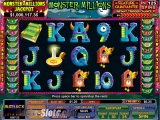
5 reels, 25 paylines, Free Games Feature, Win Win Feature, Progressive Jackpots |
|
|
|
|